

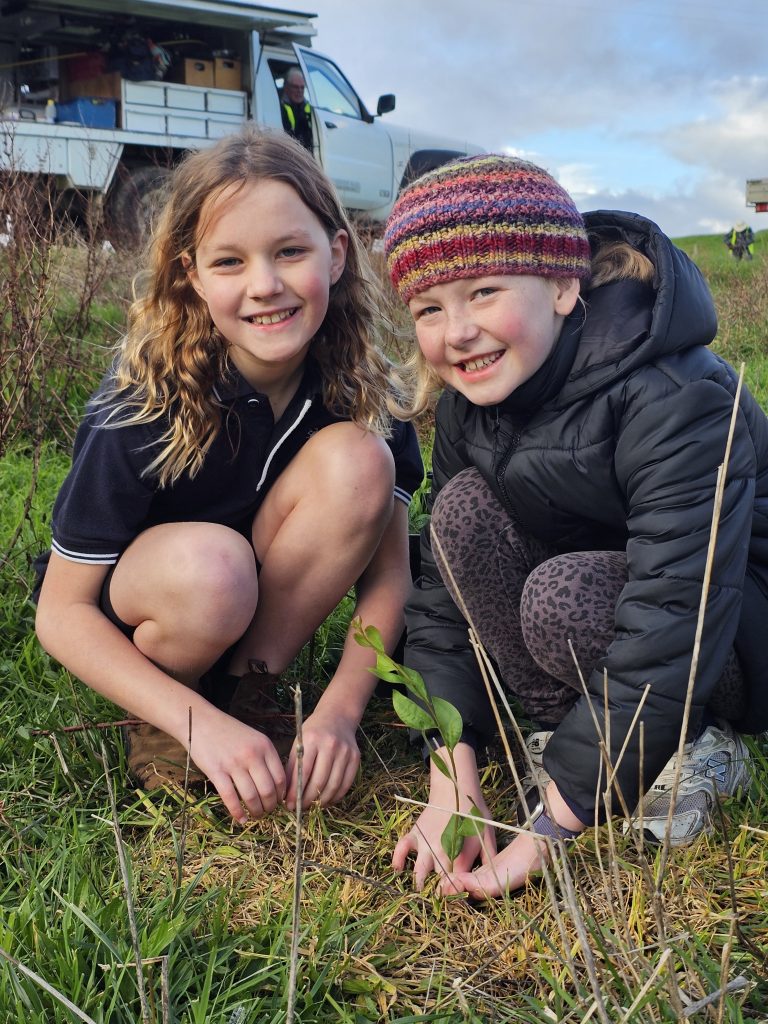
Twenty students from Inverloch Kongwak Primary School have helped plant 1,000 indigenous plants at South Gippsland Water’s Inverloch Wastewater Treatment Plant, contributing to an important revegetation project that will strengthen habitat connectivity between Inverloch and Wonthaggi. The students worked alongside Bass Coast Landcare Network, South Gippsland Conservation Society volunteers and South Gippsland Water staff, completing […]
Twenty students from Inverloch Kongwak Primary School have helped plant 1,000 indigenous plants at South Gippsland Water’s Inverloch Wastewater Treatment Plant, contributing to an important revegetation project that will strengthen habitat connectivity between Inverloch and Wonthaggi.
The students worked alongside Bass Coast Landcare Network, South Gippsland Conservation Society volunteers and South Gippsland Water staff, completing the planting in less than two hours.
The revegetation project will enhance an important wildlife corridor linking remnant vegetation with the Yallock-Bulluk Marine and Coastal Park, supporting native species including koalas, lace monitors, swamp antechinus and swamp skinks.
South Gippsland Water Managing Director, Robert Murphy, said the project demonstrated the value of community partnerships in delivering positive environmental outcomes.
“This project is creating long-term benefits for local biodiversity while giving students a hands-on opportunity to learn about conservation and environmental stewardship,” Mr Murphy said.
“We were delighted to welcome the students from Inverloch Kongwak Primary School and see their enthusiasm for protecting and enhancing the natural environment.
“The 1,000 indigenous plants established during the day will help strengthen an important wildlife corridor and improve habitat connectivity for a range of native species across the region.
“South Gippsland Water is proud to work with Bass Coast Landcare Network, South Gippsland Conservation Society volunteers and our funding partners to deliver projects that support healthy ecosystems and engaged communities.”
The project was jointly funded by South Gippsland Water and the Victorian Junior Landcare and Biodiversity Grants program, supported by Landcare Australia and the Department of Energy, Environment and Climate Action (DEECA).